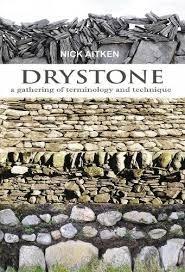
DRYSTONE "A GATHERING OF TERMINOLOGY AND TECHNIQUE"
Autor/es
- EAN: 9781068604690
- ISBN: 978-1-06-860469-0
- Editorial: RYMOUR BOOKS
- Año de la edición: 2025
- Encuadernación: Rústica
- Páginas: 372
- Materias:
popular, construcción métodos tradicionales
materiales
piedra natural, artificial
Sin stock. Envío en 15/30 días
pvp 46,00 €
This book will appeal anyone interested in drystone walling, agricultural history or old buildings. It is a collection of the specialist language and techniques used in drystone construction. Since 1700, thousands of miles of field walls and estate boundaries were built as part of the Agricultural Revolution. It was, and is, careful systematic work - not just rock piled in a heap. There were wonderfully descriptive terms for each step in the building process. It was as varied as the rock they handled, or the walls they built. Skilled men moved across the county, or country, even overseas, taking with them a specialised language which was seldom written down. There was no standardized spelling. Words changed subtly as they spread. This book gathers them in. Since the early 1900s we have been told drystone walling is a 'dying art'. Should the terminology disappear too? Are these 'old words' still relevant in a high-tech world? No!! and Yes!! The 'old words' are an important part of agricultural history. They can describe the diversity of drystone construction as it revives in this new century. The 'old words' are descriptive and poetic. Construction language nowadays is harder and unyielding, like rigid concrete and steel. The main emphasis of this volume is on the history and construction of drystone walls and (relatively) simple stone structures. It centres on Great Britain and Ireland, with examples from all over the world, including Antarctica. Nick Aitken traces the development of stone fencing, from flimsy barriers to recent experiments with computer-guided machines. We've gone from stone chips to silicon chips! Overall, this is an entertaining and informative read. We are cautioned against walling 'promiscuously', and told why a drystone wall is 'dry'. Did you know the oldest drystone structures in Scotland predate the Egyptian pyramids? That the drystone walls in Ireland were estimated to weigh 669 million tonnes and took 1.3 billion man hours to build? That stone walls can 'float' across boggy ground? That a combination of earthworms and radish will sharpen chisels? These, and more fascinating facts, myths and legends, on a range of topics, from mud to monoliths, geology, working conditions, weights and measures, mortared masonry, international comparisons, and some poetry, are revealed in this extraordinarily detailed study, illustrated by over a hundred full-color photographs of stone construction. The extensive bibliography opens up the opportunity for further study. Sources include nineteenth century clergymen, hands-on wallers, historians, geologists, civil engineers, and poets. Nick Aitken is a Scottish drystone dyker who has worked and travelled in Scotland, Ireland, Europe and North America. He is a Master Craftsman and Instructor through the Dry Stone Walling Association of Great Britain. He has been involved with a wide variety of stone structures from burial ground walls, to brochs and blackhouses. He lives in the Pacific Northwest of the US and is the author of several articles on dry stone walling, and a 'how-to' book, Drystone Materials and Techniques, published by Crowood Press in 2023. Praise for Nick Aitken and Drystone Materials and Techniques - 'Anyone interested in drystone walls will find gold in these pages.' The Flag Stone, Journal of the Dry Stone Walls Association of Australia 'Nick Aitken [is] one of a body of people for whom dry stone walls are the stuff of life.' John Wright, author of A Natural History of the Hedgerow 'This very informative and well-illustrated book was a pleasure to read; I recommend it to anyone who is interested in the craft of dry stone masonry.' Stonexus, Magazine of the Stone Foundation